Monday, August 27, 2007

Do you really want your agent to tell you the truth?

By Joel Persinger
YourRealEstateDude.com

Like most families, we have our little traditional games we play with our kids. One of my son’s favorite games when he was small has now become one of my daughter’s favorites. We call it, “this way or that way”. We drive along the neighborhood, pausing at every intersection so that our kids can decided whether we go “this way or that way.” The kids enjoy being in charge and exploring the neighborhoods at the same time. All of us were piled into the car playing that game earlier today with my daughter joyfully acting as navigator, when my wife observed, “There’s at least one house for sale on every street.” “Yes”, I said, “And the vast majority of them are overpriced!” The moment I said it, it got me thinking.

I have had several meetings this past week with prospective home sellers. In each case they asked to meet with me to discuss the market and the possible sale of their homes. In each case, I left the meeting without having listed their homes for sale. This is because, in every case the clients were expecting to sell their homes for much more than the current market will bear and knowing this, I gently but firmly told each one of them the truth.

They were disappointed to be sure, but each now has the information they need to make a well thought out and informed decision. In one case, the clients have decided to continue renting out the property. In another, the decision to stay put until the market changes was the best idea. But regardless of the direction each client chose to take, each situation has two things in common. First, I told the truth even though it wasn’t what they wanted to hear. Second, I didn’t make any money doing it. Which brings me back to my wife’s observation about the number of homes for sale and my comment about them being overpriced.

Real estate people make money when they sell a property, pure and simple. They may give advice to anyone who asks, but they don’t make any money doing it unless they get to sell a property somewhere along the way. Even if the client is left much better off after having received the advice, the real estate agent is still left without a dime of compensation and looking for the next client.

This explains why many agents are simply afraid to tell their clients the truth. It also explains why there are so many homes on the market that are hopelessly overpriced. After all, if the agent tells the client that her expectations are unrealistic, the client may simply hire an agent who will tell her what she wants to hear. The end result is that many agents list homes for sale, knowing full well that the price is too high because they are afraid to tell the client otherwise. Then they either wait for the seller to become frustrated and desperate enough to lower the price on their own or simply hound the seller to reduce the price until the property sells. Either way, the selling experience is an exercise in sleepless nights and excess stomach acid for both seller and agent. This, among other reasons, is why I decided years ago to just tell people the truth from the start.

So, if by chance our paths should cross and you ask me for advice about selling your home, don’t be surprised if I start out by asking, “Do you want me to butter you up like a Sunday biscuit, or would you like me to tell you the truth?”


Saturday, August 25, 2007

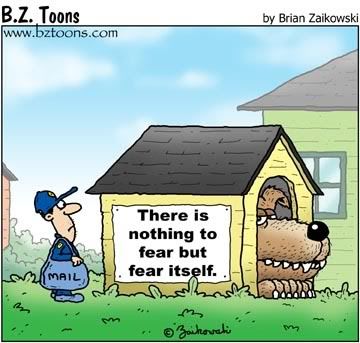
“The only thing we have to fear, is fear itself”

By Joel Persinger
YourRealEstateDude.com

I have heard from many clients this past week who have expressed their concern and downright fear for the future of our country and their individual prosperity. The news surrounding the financial market, the real estate slump and the almost daily diet of “Chicken Little” news stories screaming, “The sky is falling” have left many of us in a kind of zombie-like funk.

It is at times like these that I am most grateful for being old enough to remember a few presidents and to have parents and grandparents who told me stories about the difficulties and the leaders of their time. While I remember the, “Ask not what your country can do for you…” speech of President Kennedy, my parents and grandparents were moved by the first inaugural address of President Franklin D. Roosevelt. An address which was given during one of the most challenging times our country has ever faced.

Over the years, as they told me stories of the “Great Depression”, I sat wide eyed with amazement at the challenges they endured and the hope they were given by the words of the president they affectionately called “FDR.” It was a sad and difficult time to be sure. Those of us who are not old enough to remember or have family who could tell us the stories can only imagine, with an almost clinical detachment, the hardships faced by our nation at that time. Yet, even so, there is some truth in the notion that history repeats itself to one degree or another. It is with that thought in mind that I sat down this morning and read FDR’s speech once again.

As I read the speech, I became more and more grateful for the blessings of today and the simple fact that the present American economy bears little or no resemblance to the crippled and devastated marketplace of that era. In fact, I became convinced that the hardships we face today are minor by comparison, and on a comparative basis, cannot justifiably be called hardships at all. The overwhelming majority of our citizens are employed, interest rates are still amazingly low, the supermarkets are brimming with food, the lights still go on when I flip the switch, water still comes out of the tap, gas is still plentiful and I can still fill up my car for about half the price paid by my counterparts in other countries. “But,” you reply, “My house has been on the market for months, nobody is buying and I’m afraid that my 401K is going in the tank!” I understand these things. My properties aren’t worth as much as they used to be and my retirement funds are in jeopardy too. The difference is that I refuse to be guided by fear.

Fear is what is holding things back. Fear is what has caused buyers to hold off from buying your house. Fear is what caused the financial markets to fly wildly in every direction last week. And so I ask myself, “Fear of what?” Buyers certainly cannot be afraid of current real estate market conditions. After all, this is a buyers’ market. Interest rates are great and buyers have all the clout. The leaders of the financial markets could not have been driven to panic by the fact that they were losing money, because they weren’t losing money until they became afraid of their own shadows and began to panic.

Just as in any time of trial, the first thing we must do in order to survive is to get hold of ourselves and decide here and now that we will not panic. In the 1930s our country wasn’t going into the tank, it had already gone. Yet, in the face of those heart-wrenching circumstances, FDR offered the best encouragement anyone could have given. He said, “This great Nation will endure as it has endured, will revive and will prosper. So, first of all, let me assert my firm belief that the only thing we have to fear is fear itself…” If you are sitting on the fence, paralyzed by a fear that is keeping you from buying a home, don’t let fear win out. Look at the reality of the market. This is a buyers’ market. You have all the advantages. But it won’t last forever, so grab the opportunity while you can and don’t look back.

Monday, August 06, 2007

Is the lending market drying up?

By Joel Persinger
YourRealEstateDude.com

This past week I received a couple of emails and a phone call or two from lenders addressing some changes in company policies. It would be fair to say that some had to do with loan approval requirement and programs and others represented changes in response to an increasing number of fraudulent loans that the lending companies have gotten stuck with.

A few of the lenders in question have tightened their requirement for borrowers. As a result of these changes, it appears that borrowers are going to have to produce more information, have better credit, have a history of solid employment and jump through other such hoops in order to get a loan. Basically, the lenders want the borrower to be able to prove that he or she can actually repay the debt. This may not sound like a novel approach, but it stands in stark contrast to the recent real estate boom, during which time just about anybody could get a home loan as long as they could fog a mirror and maybe sign their name with something other than an “X”.

In the case of another lender, I received a copy of an internal memo which addressed the fact that the lender had experienced a problem with fraud. According to the memo, some loan officers had generated a significant number of fraudulent loans. This resulted in loans that could not be resold on the secondary money market. Many lending companies generate loans and then sell them, thereby earning money for generating the loan and recovering their investment once the loan is sold so that they can lend that same money over again. When lenders cannot sell a loan on the secondary market, they must hold the loan and service it themselves. This means they cannot recover their investment quickly and, therefore, potentially have less money to lend when you and I bop by asking for a loan.

At just about the time I received these emails and became concerned about the availability of money for home loans, I received a telephone call from one of San Diego County’s larger credit unions informing me of a program they are offering in which there are first time home buyer loan packages with 30 year fixed rate loans as low as 6.5%. Given these apparently mixed messages, what is the average guy on the street to think?

The bottom line is that some lenders have been hurt by their own foolish lending practices. During the real estate buying frenzy that occurred a couple of years ago they lent money to people who should never have been able to get a loan. Then they dreamed up crazy loan packages that amounted to nothing more than ticking time bombs which are now blowing up all over the place leaving a wake of short sales and foreclosures in their path. Unscrupulous loan brokers and loan officers started popping up all over the place as a result. Fraud became a serious problem. This was a hard and costly lesson, and it is only natural that they should tighten their requirements after having learned it. But does that mean that there is no money to be had? If the credit union I heard from is any indication, the answer is “NO”.

The credit union representative who called me was excited about the home lending business. She has loan programs that are very competitive and money that is available to lend, but the borrower has to be able to pay it back in order to borrow it. What a concept! So, don’t let the “bad news” get you down. If you have good credit, a good job and have been responsible with your money, you may find that the home loan you’re looking for is waiting for you just around the corner.

Sunday, July 22, 2007

Answering the crystal ball question

By Joel Persinger
YourRealEstateDude.com

As I was leaving church following the morning service, a friend of mine took me aside and asked, “Do you think home prices are going to continue dropping?” Of course, this is the question that is on everybody’s lips and the one most asked of me. I call it, “The crystal ball question” because only someone with a crystal ball could possibly give you an accurate answer. The rest of us poor mortals simply have to take an educated guess. That is precisely why all those talking heads on TV news can never seem to agree on anything even though they are billed as “experts.” It’s also why we “common” folk should take what they say with a grain of salt.

As if to illustrate the point, recent news stories have fanned the flames of consumer worries about the real estate market. They have pointed the finger of blame at real estate for everything from slow or no job growth and rising unemployment numbers to predictions of a coming recession. But, despite all the “bad market” hype the actual numbers still look pretty good.

According to a recent article in a prominent San Diego publication, unemployment in San Diego increased from 4.2 percent in May to 4.6 percent in June. Although this is only a jump of .4 percent, the article in question positioned the slight increase as a harbinger of doom, blaming the bad news on the real estate downturn and the resulting reduction in lending and construction jobs. When I read the article I couldn’t understand what all the hubbub was about. If 4.6 percent of the people in San Diego are unemployed, that means that 95.4 percent of San Diegans have a job! Almost everybody is working! That’s good news, isn’t it? Shouldn’t we be dancing in the streets?

Even the interest rates on home loans are at historic lows. I checked the rates as I was writing this column. In less than three minutes I found examples of thirty year fixed rate loans as low as 6.85 percent and fifteen year fixed rate loans as low as 6.68 percent.

Sure, home sales have slowed in 2007 compared with 2006, and a bunch of fair weather real estate people who jumped in when it was hot are being forced to find something else to do, but contrary to popular misconceptions, homes are still selling. According to statistics provided by the San Diego Association of Realtors website, 2,859 properties sold in June 2006 while 2,468 properties sold in June of 2007. That is a sales decline of 391 properties or 13.7 percent as reported by the Multiple Listings Service for all of San Diego County. Maybe I’m crazy, but a drop of thirteen or fourteen percent does not rise to a level which justifies panic in my opinion.

So, why do media outlets continue pushing negative stories about the real estate market? The answer can be found when we follow the money. The shocking fact is that news outlets exist to make money and bad news sells.

So what about that crystal ball question I mentioned before? Are prices going to drop even more? The answer is, “maybe and maybe not.” No one really knows for sure and anyone who tells you they do is more smoke and mirrors than crystal ball. All I can tell you for certain is that if history repeats itself, the market will ebb and flow like the tide just as it always has. If the current tide is not right for you, then be patient. Given time, it will change.

Monday, July 16, 2007

Real Estate is a People Business

By Joel Persinger
YourRealEstateDude.com

When I started practicing real estate as a shiny new agent, still packaged in the shrink rap like a new Christmas toy, my grandfather took me aside and said, “Now, always remember, Joel, real estate is a people business.” That was almost eighteen years ago and many things have changed. My grandfather is no longer around to give me his usual great advice, I’ve got a lot more gray hair on my head and technology has changed the way most industries do business. But one thing has not changed; real estate is still a people business.

With the advent of technology many things that used to be considered services have been reduced to commodities. Just one example is the legal industry. It’s no longer necessary to go to an attorney to incorporate or draw up a trust (although, I still advise you to do so). You can find the required documents on the internet, fill them out yourself and download them for a fraction of the fee your attorney would charge.

The same can be said for a host of other “service based” industries, and real estate is no exception. As I write this article, you can go on the web and do everything from getting a rough estimate of your home’s value and searching for homes for sale to placing an ad to sell your home or watching a virtual or video tour of other homes on the market. There are even internet-based real estate companies that are doing their best to make sure that you can buy or sell a house without ever having to see another human being, or not much of one anyway. They are doing their best to turn real estate into a commodity business.

The problem arises when we try to take a home and make it into a house. A refrigerator has always been, and will always be a refrigerator. It’s a commodity pure and simple. But a home is not just a house. It’s the place where you live. It’s the place where you raise your kids, entertain your friends and create a haven from the challenges and difficulties of the world. As the old saying goes, “Be it ever so humble, there’s no place like home.”

I recently ask a client why he decided not to go with an internet-based, discount real estate firm since he had been considering one before he hired me. He said, “This is my home that I’m selling.” That simple statement said volumes. People need people they trust when the things they are trying to do run close to the heart or through uncharted waters. Such is the case when buying or selling a home. It is an emotional and somewhat frightening journey for many of us and we need someone who cares about our welfare and has navigated the treacherous waters to guide us along this journey.

Filling that roll of industry expert, trusted advisor and guide through difficult times is hard to do from a distance. I don’t know about you, but I need the people in my corner right next to me. I need to see them face to face and know that they are there when I need them. That’s why it’s next to impossible to guide someone effectively through one of the most difficult processes of life by email or over the phone, and why many people are not pleased with the experience of using a “virtual” real estate agent.

After all this time and all the technology with widgets galore and more information than any of us could every want or need, the truth of the real estate industry hasn’t changed one bit and Grandpa Charlie was right: “Real estate is a people business.”

Monday, July 02, 2007

Conquering the fear factor

By Joel Persinger
YourRealEstateDude.com

A couple of weeks ago I had the privilege of giving a seminar for home buyers. During the class, I ask the attendees why they thought buyers aren’t buying. As they shouted out the reasons, I scribbled them down. They must have listed a dozen reasons, but what it all boiled down to was fear.

In today’s San Diego real estate market, home loan interest rates are historically low, there are a lot of homes to choose from, sellers are no longer being unreasonable about their asking prices and there are good “deals” to be found if you just take the time to look. So, at first glance being afraid to buy doesn’t seem to make much sense.

It’s only when you take a deeper look at the issue that you discover that buyers really aren’t afraid to buy. They are afraid of making a mistake. They want to buy low so that they can sell high. After all, that’s the old rule isn’t it? They’re just waiting around for prices to hit rock bottom so they can scoop up a deal.

This reminds me of a test I once took when applying for a government job about thirty years ago. It was a test designed to find out if the applicant had some screws loose upstairs. I don’t remember very many of the questions, but there were two that I will never forget. The first asked, “Do you believe that Jesus will return?” Followed by the second which asked, “Do you know the date?” Surprisingly enough, these are the very same questions that many buyers are hoping to answer about real estate! “Do you believe that prices will hit rock bottom at some point?” “Do you know the date?”

The answer to the first questions is easy. We all know that prices will bottom out at some point and the market curve will start climbing back up again. But nobody knows the date and anyone who thinks they do has just as many screws loose as those who thought they could answer the “date” question in the test I took thirty years ago. In fact, today could be the day for all we know and prices might have hit rock bottom just as you started reading this article. The one thing we know for sure is that “timing” the market perfectly is not the answer. The only way it can be done is by blind stupid luck and I have never known anyone who has managed to do it. No, the answer is not “timing”; it’s “time.”

If we take a look at the real estate market in Southern California, we will find that homes have appreciated an average of about seven percent per year for over fifty years. Some years the market was down and other years up. But when averaged over that fifty year time frame, the market has made a steady and reliable climb. So the burning question is not so much when you should by, but how long you should own. As a general rule of thumb, if you are planning to own a home for at least five to seven years, it doesn’t really matter when you buy it. Most likely you’ll come out smelling like a rose regardless.

So take some advice from an old real estate investor. If you’re planning on owning that property for five or more years, get off the fence and make your move. Now is a great time to buy.

Friday, June 22, 2007

When is "equity" really equity?

By Joel Persinger
YourRealEstateDude.com

As I walk through my neighborhood each morning I can do something that I could hardly have done twenty years ago. I can see my neighbor’s equity in their driveways. Over the last five or six years, some of my neighbors seemed to have struck it rich. Suddenly they were able to fulfill the new American dream of having more “stuff” than the guy next door. Almost over night, driveways were populated by high end luxury cars, new trucks, dune buggies, RVs or boats, all purchased with something called “equity.” But, what exactly is equity?

If you listened to all the late night infomercials or “Get Rich in Real Estate” books that came out during the recent real estate boom, you are probably convinced that equity is the money you have buried in your house just waiting to be tapped. It’s as if you had a hidden deposit of crude oil just a few feet under the grass in your front yard and every huckster in the world knew a way for you to tap that thing the easy way and live the good life. The problem is; that’s not how equity works.

In the purest sense of the word, equity is a rough estimate of the amount of money you “might” receive if you sold your home at any given moment. That estimate is a moving target at best, since property values rise and fall as the market shifts. Thus, the equity you had last year is not the same as the equity you have this year, or the equity you will have next year. It’s as if that crude oil deposit under your lawn had the oddball ability to grow or shrink at a moment’s notice without first consulting you. Consequently, taking out loans against your equity can be somewhat risky depending upon what you plan to do with the money.

Some of the folks in my neighborhood took out loans against their equity to improve their homes. In doing so, they increased the value of the property and along with it, their “equity.” One fellow I know purchased his home long ago. He owed very little on it and wanted to improve the property. He took out a loan for $100,000 and improved the landscaping, added a garage, put in a new driveway, RV parking a covered porch, new windows & doors and fixed up the inside. When he was done, his home was a much nicer place to live and the value had increased by about $150,000. Knowing that equity rises and falls like the tide, he then applied himself diligently to paying off the loan as soon as possible.

Another fellow used about the same amount of his equity to buy toys which depreciate rather quickly. If you have ever purchased a new car, RV or boat, you know that the value of such items decreases dramatically the moment you take them home. In his mind, he was living the good life. He had all the toys he ever wanted and then some. But, the market shifted and the interest rate on his $100,000 loan started to climb. Suddenly, living the good life started to become painful. So, he refinanced his house and rolled the $100,000 into the original amount he owed. Now he has one giant loan with one giant payment and I haven’t seen his toys leave his driveway very often of late. He works a lot.

As you consider the two examples I’ve given you, it’s important to remember the classic definition of “equity” which I gave you at the beginning. It is a rough estimate of the amount of money you “might” receive if you sold your home. It is not a bank account, a gold mine or a giant oil deposit under your front lawn. You can take a loan against that estimate, but it is a loan against the “possibility” of future earnings. You only really have equity when your house is sold and you have the money in your hand. Then and only then do you know for certain how much equity you really had.

Wednesday, June 20, 2007

“Done” is never perfect

By Joel Persinger
YourRealEstateDude.com

Being a bit of a perfectionist about many things, I have missed many an opportunity simply because I was trying to get something done perfectly rather than simply getting it done. One day, a friend of mine was watching me working furiously at a project in an effort to make it “perfect”. He noted that I was also running very close to my deadline. At the moment of most frustration for me, he nudged his way in and said, “Let me give you a hand”. The next thing I new, he had slapped the thing together, made sure it worked and announced, “There; all done”.

I made my deadline because he interceded, but I wasn’t happy about it. We talked about it shortly after I delivered the “finished” project. Actually, I should say that I talked about it. I ranted and raved about the “proper” way to do things and that “sloppy” work is best not done at all. All during my little tirade, he just sat quietly and listened until I ran out of steam. When I could think of nothing else to say and was sitting there, red faced and huffing, he leaned over and quietly said, “Done is never perfect.” Then he got up and strolled out. I have never forgotten that lesson.

Decades later, I have clients who like things to be perfect just as much as I. The problem is that when they are trying to sell a property, the home never ends up on the market because the seller is constantly working to make it “perfect” prior to selling. Perfectionist buyers never buy a property, because they never find one that is “perfect.” Even if they ever do make an offer on a property, they drive the seller and both agents crazy complaining about every little detail to the point that the seller and buyer can’t stand each other. The end result is that many such escrows never close and the buyer still doesn’t end up owning a home.

So, here’s a little dose of reality for you if you’re a perfectionist like me. The world is not perfect and never will be. No home you buy will ever be perfect. If you’re selling, just accept the fact that your house is never going to be perfect. Stop working yourself to death, put it on the market and get it sold. Otherwise, you’re going to end up owning it much longer than you planned. Do the best job you can given the resources and time available and then move on. Oh, and by the way, about that little project I told you about at the beginning. Everybody loved it!

Tuesday, June 05, 2007

Avoiding the sharks in real estate waters

By Joel Persinger
YourRealEstateDude.com

My grandfather used to call them, “Snake oil salesman.” My dad’s term of choice was, “Ambulance chasers.” But, the common term that I most often hear applied to such folks is, “Sharks.” They are the opportunists who prey upon those in trouble. They pop up at every disaster or financial downturn. So, it’s not surprising to see them circling the waters of the San Diego real estate market.

I have said many times that the current real estate market in San Diego is not bad; it’s just different. We found ourselves in an unusual market of double digit appreciation for a few years and those of us with short memories took that to be “normal” when it was not. The market we have currently is “normal.”

That having been said, the previous market spurred people to new heights of greed and unrealistic expectations, for which many are now paying the price. Homeowners and buyers leveraged just about every bit of equity because money was cheep and easy to get. But that is no longer the case and many “homeowners” owe more on their property than it is worth. They are upside down, frightened and desperately looking for an escape, like shipwrecked sailors clinging to the last vestiges of their sinking vessel. Can you see the sharks circling? I can.

Every day I see the little signs posted on the side of the road here and there offering to help those who are in this unenviable position. In bold letters they announce, “Save yourself from foreclosure” or question, “Owe more on your home than it’s worth?” While some of these outfits might be legitimate, I’d bet my first dollar that most of them are simply opportunists looking for a quick buck from desperate people. In my humble opinion, you’d be wise not to jump into the water with any of them lest you get bit!

So, where do you turn when you’re upside down on your home and feeling like your taking your last ride on a ship called the Titanic? After all, these little signs on the side of the road are offering you a life boat and I’ve just told you not to climb in. The simple answer is to educate yourself by seeking lots of advice and doing your homework.

The first thing to remember is that there are no magic solutions, no matter what the “sharks” may claim. You probably didn’t get yourself into a financial mess without working at it and, like it or not, you’re going to have to work to get yourself out. The second thing is to get advice. If you owe more on your home than it’s worth, you should seek advice from a qualified attorney, a CPA who has direct experience helping people in your situation and a real estate broker whom you know well and trust to be honest and to tell you the hard truth.

As you pull these professionals together to work on your behalf, it is important to remember that, while it is helpful to delegate to people with greater experience and knowledge, it is never a good idea to abdicate your responsibility of taking care of your own affairs. It has been my experience that nobody cares more about your finances than you. My advice is to roll up your sleeves and stay actively involved. When it’s “sink or swim”, the only way to keep your head above water is to keep treading and the only way to keep from being eaten is to avoid the sharks.

Saturday, June 02, 2007

Rolling with the punches

By Joel Persinger
YourRealEstateDude.com

As the old saying goes, “into every life a little rain must fall.” That old proverb comes true more often than not when someone is buying or selling a home. Sometimes the issues are many. Sometimes they are few. At times they can loom so large as to seem overpowering and other times so small as to hardly warrant notice. But one way or the other, there are almost always last minute issues that pop up during an escrow. The trick is in not falling to pieces when these little devils pop up.

I recently had an escrow that was fraught with last minute issues that I must admit, I have never experienced before. I had listed a home for an older couple who wanted to move closer to their kids. They had lived in the home for many years and one of them had taken quite ill.

Once the property was listed my folks and I went right to work. We took pictures, ordered advertising and had a sign company come out to place the “For Sale” sign in the front yard. Placing a sign in the yard has never presented a problem before, but somehow the sign man struck a gas line when he dug the hole for the sign. You would think we had thrown a party for first responders. Just about everyone imaginable showed up, from the police and fire department to the gas and electric company.

Not long after we placed the property on the market, the couple went ahead and moved. After all, one of them was ill and they didn’t want to delay their goal of being closer to family. It’s a good thing they did, because shortly after the move the spouse who had taken ill died. It was quite a tragedy and had everyone thrown for a loop, including the buyer and buyer’s agent.

As I mentioned earlier, they had lived in the property for many years and had let some things go a bit. Concerned about maintenance issues, the buyer requested that the pool be professionally serviced. The seller complied and a pool company was contracted to clean and service the pool and equipment. Shortly after the filter was cleaned and new Diatomaceous Earth was installed, the pool became a cloudy, disgusting mess. The Diatomaceous Earth, a powdery substance used to help the pool filter do its job, had found its way back into the pool. During the servicing, a valve had gone bad and, once again, an issue needed to resolved that had the buyer in a panic.

Having finally completed the repairs to the pool, dealt with the gas line issue and addressed the necessary paperwork required in order to complete the escrow after the death of one of the sellers, it seemed that everything was running smoothly, and the buyer’s agent scheduled an appointment to complete their final walk through the house.

That very morning, I received a call from the termite company. Apparently, while drilling into the slab in order to treat the home for subterranean termites, the termite company technician struck a water line and flooded the laundry room. Escrow was scheduled to close the next day and the buyer was ready to move in. Unfortunately, everything was delayed because the water had to be turned off in order to make repairs. As I got into my truck to leave the property later that day, I said to myself, “If the only choices are to laugh or cry, laughing is the better of the two.”

Believe it or not, I have told you this story for a reason. Just about every escrow has issues that pop up. The vast majority of the time, everything works out in the end. As the buyer or seller, you have the choice of making yourself miserable by freaking out at every opportunity, or understanding from the outset that things will go wrong and simply roll with the punches when they do.

Wednesday, May 23, 2007

Is a discount real estate company a better deal?

By Joel Persinger
YourRealEstateDude.com

In the last couple of weeks I haven’t been able to go anywhere without a “news” story about discount real estate companies hitting me squarely in the face. It seems that after many years the world has discovered this “new” thing called a discount real estate broker. Even 60 Minutes got into the act with a story touting the virtues of using a discount Realtor. I found the 60 Minutes piece very interesting. In fact, by the time I got done watching the thing, I was convinced that real estate was an antiquated business and that any realtor other than an internet discounter ought to be run out of town on a rail. But that would mean I would be run out of town myself.

The truth is, there have been discount real estate companies of one sort or another for quite some time. The internet has simply provided a way for inventive folks to repackage an old idea: if you do a lot of the work and only have the professionals do the minimum needed, you get to pay less for the service. It’s a good idea and it works for many people, but trying to make an "apples to apples" comparison between a discount broker and a full service one is a little like comparing a fast food joint with a high dollar steak house.

So what exactly are the pros and cons of using one type of brokerage or the other? If you listen to the folks on 60 Minutes you might be convinced that the entire thing revolves around what real estate agents do. To some degree this is true and the simple difference between a full service shop and a discounter is that with the full service brokerage the agent does the work and with the discounter the client does a lot of it. But I submit that the true story is centered more around what real estate agents know or in some cases don’t.

We may not think about it much, but the main reason most of us choose a particular professional is to benefit from what he or she knows. We know that the doctor will treat what ails us and that the CPA will do our taxes, but in large part we go to the doctor to find out what ails us in the first place and to the CPA to get help in our effort to pay less to Uncle Sam. The same is true with a Realtor. We know that a Realtor will help us buy or sell a house, but it is the expertise and advise we take advantage of along the way that really counts.

While a doctor, lawyer or CPA must attend specialized school for long periods in order to join their chosen profession, a real estate agent has no such lofty barrier to overcome. The majority of a real estate agent’s knowledge is gained through continuing education and experience. The more experience an agent acquires, the larger the client base he or she builds and the more likely that agent is to work at a brokerage where more autonomy and higher pay are available. Almost without exception this means a full service brokerage. By contrast, the newer the agent, the less experience acquired and the greater the need for the brokerage to provide sales leads and hand holding. Discount brokers pay their agents less per home sold than does a full service brokerage. In order to attract agents, discounters promise to provide the agents with lots of sales leads and hand holding. Consequently, they tend to attract new and inexperienced Realtors. Once these agents have gained some experience and built a following, they generally leave and work for a full service shop where they can make more money. Thus, the discount broker is constantly plagued with turnover, losing the experienced agents and hiring the new and inexperienced ones.

So, which is better for you; to save some money, do a lot of the work yourself and have an inexperienced agent working for you, or spend some money, let the agent do the work and have an experienced and knowledgeable Realtor in your corner?

Monday, May 14, 2007

Are prices going up or down or what?

By Joel Persinger
YourRealEstateDude.com

In spite of what most real estate gurus might say, it is quite common for real estate prognosticators to oversimplify complicated things, over-complicate simple things and sensationalize just about everything. Every day seems to bring another article or TV news story proclaiming that home prices are dropping, going up or staying about the same. Hence, the almost total confusion expressed on the faces of many clients who ask me the age old question, “So, are home prices going up or down or what?”

While such a question may seem simple on the surface, the answer is actually somewhat complicated, once you dig a little deeper into the various layers of the market. Real estate “educators” like to say that the real estate market is stratified. This is “big speak” that simply means that the market is made up of many parts or segments that don’t all act or look alike. The condo market is very different from the single family home market. Similarly, the market in my East County neighborhood is very different from the market in La Jolla or Del Mar. There are even segments within segments. New condos are an entirely different market than condo conversions or even resale condos.

The other day, my marketing manager brought a newspaper article for me to review. The article claimed a value for a median priced home in San Diego as being quite different from what he is experiencing in his day to day work in my office. He was quite surprised and was opening the article to tell me about it, when he suddenly realized that it was focused on the market for new homes rather than resale homes. Just as with the other examples I mentioned, the new home and resale home markets are completely different and the news media moguls, whose job it is to sell news, seize upon whichever numbers are more sensational at the moment and, “Bam!” a news story is born.

With all these parts and pieces responding differently in the current marketplace and the media reporting numbers that, by in large, are useful to nobody, how does the average person ever get a handle on which way the prices are going? The answer lies in recognizing the media hype for what it is, and in being more specific with the questions you ask your real estate broker. It has been my experience that most people who ask me about market prices are wondering what has happened to the price of their property. Others are attempting to gauge whether prices have become favorable enough for them to buy property somewhere down the line. In each case, knowing the specifics allows me to provide an answer that has some value.

So, if you ask your neighborhood real estate professional, “Are the prices going up or down?” the answer is likely to be, “Both”. However, if you ask, “What’s happening to the value of my house?” or “Have the prices of duplexes in El Cajon come down?” the answer you get will be a lot more valuable.

Wednesday, May 02, 2007

In a buyer’s market, price is king

By Joel Persinger
YourRealEstateDude.com

The real estate market is like the tide in that it ebbs and flows. For a time, the market may be hopping with homes selling like hotcakes and people from every walk of life jumping into the market, hoping to make a quick buck. Then the tide will go out and the market will change. Soon homes are for sale at every turn and buyers are so scarce it’s almost as if they’ve jumped on the nearest space ship and left the planet all together.

The one constant in all of this is that the vast majority of sellers try to ring every dime out of the sale and have an almost mythical distaste for agents who urge them to drop their asking price in order to get a sale going in the first place. This can leave the agents frustrated, the sellers angry and the houses sitting on the market for long periods unsold.

Since I’m representing a number of sellers at the moment, I’ve had the opportunity recently to visit various regional boards of Realtors during their weekly “pitch sessions.” These are rather large meetings of local agents who come to present their clients’ properties to other agents in the area in hopes of generating interest or getting feedback which they can share with their clients at a later time. Obviously, I attend these meetings in order to promote properties owned by my clients. But, I stay through the entire meeting anyway to be polite. In the process, I get to hear the other agents “pitch” their clients’ properties to the group and sometimes observe some very interesting trends.

Most recently I attended meeting at various real estate boards where it seemed that agent after agent displayed enormous frustration at having been placed in the same impossible situation. Even though the meetings were in different parts of the county, the experience was roughly the same. An agent would walk up to the podium and say, “I know you’re probably tired of my pitching this same property over and over again, but none of you ever send me an offer. Why don’t you send me an offer?” To which someone will invariably retort, “Lower the price.” The speaker will then respond with the most outlandish of statements, “My seller has agreed to lower the price if he gets an offer.” The audience will respond with a mixture of giggles and stunned silence as the presenter leaves the podium and is replaced by the next agent to present. Now here’s where it gets interesting. Almost without exception, the next agent will pitch the property and then announce that his seller too has agreed to lower the price after receiving an offer. Not long after that another agent or two will share the same thing about their seller’s mindset.

While it may seem sensible to a seller to keep the price high in order to haggle with the buyer once an offer is made, in actual practice, keeping the price high has the simple and predictable effect of keeping an offer from ever being made in the first place. This is particularly true in a buyers’ market such as the one we are currently experiencing. The bottom line is that it’s darn difficult to haggle with a buyer that you haven’t got. Still, sellers will cling to that high price like a drowning man clinging to a leaky life preserver. But, when the air leaks out, no matter how hard he clings, the drowning man drowns. The same is true of sellers who cling to a high price while the equity in their home is leaking out in a declining market.

So, as your real estate dude, I’m here to tell you the hard truth. In a buyers’ market, price is king. It’s a hard pill to swallow, but it’s the truth just the same. If your home isn’t selling and you want to get it sold there is only one way to do it in this market: Lower the price.

Thursday, April 26, 2007

Taming the terrible tenant (Part 4)

By Joel Persinger
YourRealEstateDude.com

It may seem like a cynical statement, but it has been my experience that human nature has an irritating tendency to rear its ugly head in the form of emotional attachment at just the right moment to cause disaster in a business relationship. The relationship between a landlord and tenant is by no means immune to this phenomenon. Landlords will go to all the effort to screen the prospect completely and get an excellent lease signed ahead of time only to let the tenant get away with murder at some later date simply because they’ve become friends or the landlord doesn’t want to stir up additional trouble. What some landlords don’t seem to realize is that once the tenant has gotten away with causing problems without reaping consequences, the problems, in all likelihood, will get steadily worse.

The simplest and most effective way to avoid such situations is to remember that the relationship between landlord and tenant is based upon a mutually beneficial business foundation. The tenant benefits by having the use of the property in a leasehold estate and the landlord benefits by receiving payment in the form of rent. Once we take the position that the relationship is based upon a business footing, it is easier to keep an arms length “friendly, but not friends” approach to the deal. This is best done by using the lease as the cornerstone on which the relationship is built.

Since a lease agreement is essentially a legal document which spells out the responsibilities and obligations of both the tenant and the landlord, it is essentially the document which defines the relationship. I wish I had such a defining document that covered the relationship I have with my kids. They are constantly testing the outer edges of my resolve, looking for loopholes that will allow them to get what they want without paying the price. If you have kids, I’ll bet you have had a similar experience. Here’s a wakeup call for you: tenants are no different! They will take every opportunity to chip away at the limits of the lease. As the old saying goes, “if you give an inch, they’ll take a mile.”

This past year my wife and I rented a home we own to a young lady with her children. She came with glowing recommendations, passed the screening process with flying colors, had an excellent job and seemed like the perfect tenant. She paid her first month’s rent in advance as require along with her deposit and everything seemed right with the world. Then the first of the next month arrived with no rent check. By the sixth of the month I was sending her a three day notice to pay rent or quit. She paid the rent the next day and asked me to waive the $50.00 late fee. I said, “No, we do not waive late fees,” and mailed her rent check back to her because it did not include the late fee. She was absolutely beside herself and scrambled to send us a cashier’s check by “next day air” in order to avoid the eviction proceedings we intended to begin at the end of the three days’ notice.

Over the six months that followed I heard every excuse imaginable to explain why she was late with her rent. Each time I sent a three day notice right on time and required her to pay the late fee. After six months I told my wife, “I hope she pays late again, I’m getting to like receiving the extra fifty bucks.” But, after six months of testing my resolve and $300 in late fees, she finally gave up and paid her rent on time. She still does.

This is but one example, but the moral of the story is the same in every case. Stick to the terms of the lease no matter how compelling the sob story or how challenging it may be for you to do so. Tenants will do their best to take advantage of you. If you let them, your life as a property owner will be a misery. If you hold them to the lease, the majority of your tenants will eventually get tired of suffering the consequences and either move or abide by the lease terms voluntarily.

Thursday, April 19, 2007

Taming the terrible tenant (Part 3)

By Joel Persinger
YourRealEstateDude.com

Once you have properly screened a prospective tenant by performing a credit check, criminal background investigation and had the records searched for previous evictions, the next step is to write a strong, tight lease for the new tenant to abide by.

There’s an old saying that a verbal agreement isn’t worth the paper it’s written on. While it’s certainly possible to strike a mutually beneficial verbal agreement, proving who agreed to what when things go sideways is no small project to be sure. As a result, the written agreement has become the standard for renting or leasing property. But it’s not enough to simply “get it in writing.” It’s also important for the lease to be legal in the jurisdiction where it is used, understandable to both you and the tenant, detailed and specific.

Not being an attorney, I gravitate toward using one of the many standard leases that are available. You can buy a standard lease “form” at just about any office supply store, but the best leases I have found in San Diego are produced by the California Association of Realtors. You might also contact your local apartment owners association for legal documents they might have available to members.

Once you have a standard lease make sure you read it completely and understand what it says before you use it. If there are places to fill out on the lease it is best to make sure that you fill it out completely and accurately.

Remember, standard lease agreements are just that, “standard”. Since one size does not generally fit all, you may want to tighten up your lease by adding a list of rules and regulations incorporating them into the lease. It would be wise to consult your attorney to make sure that any rules you include are legal in your area.

Some examples of rules you might wish to include are restrictions against storage of junk vehicles or non-operating vehicles on or in front of the property, performing mechanical work or repairs on vehicles, parking or driving vehicles on the lawn, damaging, killing, destroying, uprooting or chopping down any tree, bush or shrub, mounting the roof or allowing any guest to do so, performing structural work, adding room additions or otherwise altering the property, renting rooms to roommates or otherwise causing anyone to move into the property other than those persons who are listed on the lease, having loud and or destructive parties and so on.
It takes time, effort and forethought to put together a good lease agreement with tenant rules, but the benefits of having established a clear framework of boundaries on which to base your relationship with the tenant is invaluable. Next week I’ll give you the straight dope on sticking to the lease agreement once you have one.

Wednesday, April 11, 2007

Taming the terrible tenant Part 2

By Joel Persinger
YourRealEstateDude.com

As a second generation real estate broker and investor I’ve heard just about every landlord horror story one can imagine. Some of them would frighten even the hardiest of souls out of ever wanting to own rental property. But no matter what the storytellers may say, the majority of tenant disaster stories can be avoided by following these three simple rules from the beginning: Screen them well, Write it tight and Stick to it. This week, we’ll take a look at screening them well.

This may strike you as a shocking fact, but most mom and pop landlords do a very poor job of screening prospective tenants if they screen them at all. Screening a tenant is the process of checking references and running credit and background checks. In order to keep your life as a landlord from being miserable, you should screen every tenant for credit history, criminal background and previous evictions. Checking references is also important although less reliable since the prospect will generally leave out any poor references.

The key behind screening prospects is less in the screening and more in telling them in advance that you are going to do it. Since the law allows me to charge prospects up to $30.00 for the background check I insist upon the money up front in cash. After the prospect has filled out the rental application I explain the background check procedure, tell the prospect I need $30.00 in cash (non-refundable) and ask, “When I check your credit, criminal background and to see if you have ever been evicted am I going to find anything I don’t like?” Those who have a questionable background will generally make some excuse about the money and promise to return with it later. They never do.

People with poor backgrounds know they can’t possibly get through the screening, so they keep applying with different landlords until they find one who doesn’t bother to check. In my experience, it is the people who seem to be the least likely to cause a problem who are the most devastating. Problem tenants learn how to manipulate prospective landlords and property managers. They can be the nicest people and can give you all the warm and fuzzy feelings you are looking for. The next thing you know, you haven’t bothered to check their background because they seem so perfect for the property. Many are the clients who have called me to talk about tenant problems singing the old refrain, “but they were so nice.” I can give you no better advice than to run the background check on everyone who applies regardless of impressions and make everyone of them pay the non-refundable fee up front and in cash.

Screening all prospective tenants well is easily the most important step toward avoiding tenant problems in the future. I’ll give you some tips about leases and sticking to them in the next couple off weeks. In the meantime, if you do nothing else remember to screen them well.

Tuesday, April 03, 2007

Taming the terrible tenant part 1

By Joel Persinger
YourRealEstateDude.com

This past week has seen my phone ring off the hook with a number of clients who are planning to sell rental homes that are tenant occupied. Among other burning questions has been, “How do I get my tenant to cooperate with the sale”?

Selling a home or condominium is best done when prospective buyers have the opportunity to visit the home. Buyers like to walk through the home, hang out in the yard and generally get the feel of the property. They like to imagine themselves living there to see if it fits their needs and desires. This requires the buyers and their agents to have access to the home.

There are several ways to grant access to buyers, but the best and most efficient comes in the form of a “lockbox”. A “lockbox” is essentially a little safe in which your real estate broker places the key to your property. The safe is attached to the home on a doorknob, gas meter or some other secure location and is only accessible to real estate professionals who have a computerized access card and PIN. Using a “lockbox”, an agent can get to the key and show the property even when nobody is home. When you’re selling a home that’s vacant, providing access to agents and buyers is no big deal because nobody is there to be inconvenienced by agents showing the home. But, when you have a tenant living in the property, you need that person’s cooperation in order to make the property available for showing. If the tenant is unwilling to cooperate, selling the property can make your life very interesting.

Unlike you, your tenant has no vested interest in your property being sold. In fact, the reverse may be true. Your tenant may not wish to move and may take every opportunity to sabotage your efforts to sell. It is quite common for tenants to refuse to allow buyers to see the property or to make it so difficult to see that it might as well be nailed shut for all practical purposes. Tenants who are willing to allow the property to be shown often leave it in such disarray that any buyer visiting the property would swear that a natural disaster had struck. In many situations tenants keep the property from selling simply by being rude to every buyer and agent who comes along. Regardless of the tactic used, it is quite possible for your tenant to make your life miserable and keep the property from selling or force you to sell it for less just to get rid of the problem.

One answer to this age old dilemma is often found in my grandfather’s old philosophy he called, “everybody wins.” Grandpa Charlie liked situations in which everyone came out a winner to one degree or another. If selling your property is going to benefit you, then you must find a way that selling your property will benefit the tenant as well. If you want the tenant to cooperate, then you must provide a reason to do so. I advise my clients to put themselves in the tenant’s shoes and consider what the tenant will need in order to find a place to move. Three things come to mind almost immediately: the return of the tenants deposit, a good reference and money. Following this revelation we devise a “tenant compensation plan” which offers to provide the full return of the deposit, a favorable reference and some extra money if the tenant will cooperate with the sale by keeping the home presentable, permitting a “lockbox” to be placed on the property and making it easy and convenient for agents to bring their buyers. The tenant agrees to this in writing and only receives the full reward if and when the property sells. Taming the terrible tenant is not always easy and not every tenant will agree to such a plan, but it has been my experience that the odds of gaining the cooperation of your tenant using this kind of arrangement are pretty good.

Tuesday, March 27, 2007

The Risky Loan Flap And What’s Next

By Joel Persinger
YourRealEstateDude.com

The media has been buzzing and people have been chattering about all the bad news surrounding risky loans for weeks. Everybody seems consumed by the fact that foreclosures are up, lenders are going down the tubes and the politicians are donning their superhero outfits and promising to come to the rescue of the poor innocent homeowners who were swindled by the bait and switch antics of evil lenders.

Only this morning a friend of mine sent me an article announcing the California Legislature’s plan to “Clamp down on risky home loans.” As I read the article I kept asking myself, “Why doesn’t somebody write something that isn’t just a lot of finger pointing and political grandstanding?” Nobody else appears to be ready to do so, so I will.

It is fair to state that some lenders sold loans that were not in the best interest of the borrowers and that some borrowers were eager to take risks that were foolish in the extreme. Some lenders took unfair advantage in order to make a buck. But it is irresponsible to insinuate, as some media stories have, that every lender who provided a buyer with a risky loan is a crook or that every borrower who took out such a loan is a victim. Some borrowers had delusions of grandeur and made foolish decisions based upon what their itching ears wanted to hear. In cases of which I am personally aware, borrowers made decisions in direct opposition to the specific advice given them by knowledgeable professionals. So, for your sake, I’m putting all finger pointing aside and taking a look at how this situation might affect the market.

As real estate markets ebb and flow, one of the factors that affect them is the availability of money. When money is easy to get, people find it easier to buy a home and sellers find it easier to sell one. However, when money is more difficult to get, buyers have more trouble qualifying for loans, purchasing a home is more difficult and selling a house is more challenging as well. But what does that have to do with “sub-prime” lenders going into the tank and the government stepping in to create more regulation? The answer lies in the availability of money.

By way of example, I received a courtesy call from a loan broker yesterday concerning clients with questionable credit scores. He was curious if I had any clients with poor credit. In his words, “It’s going to be much more difficult to get them a loan.” According to this loan broker, some lending institutions he works with have stopped taking loan applications for sub-prime loans. A sub-prime loan is a loan offered to a borrower with a poor credit history. If this trend continues, it has the potential to remove these poor credit buyers from the marketplace, further reducing the number of available buyers.

If the corresponding reduction in the number of available buyers is significant, it will mean that sellers may need to make further adjustments in their strategy to be more competitive. Price reductions and incentives such as paying the buyer’s closing costs may be just the start.
While it still remains unclear exactly what effect, if any, these issues may have on the market, if you’re planning on buying or selling any time soon you would be wise to keep your ear to the ground and your eye on the horizon.

Thursday, March 22, 2007

Everything is negotiable

By Joel Persinger
YourRealEstateDude.com

Many years ago a friend of mine performed what I believed was a minor miracle. He went into a retail store and made a deal. I was looking for a portable keyboard stand at the local music store and had gone in with him to check prices. I had been to the swap meet many times and knew how to haggle, but I was firmly of the belief that such deal making was not possible with firmly established stores. My buddy, on the other hand, was not held back by such belief. Knowing that my birthday was coming up, he went back to the store later that day and purchased the stand as a gift for less than half the asking price. When he told me about the deal I asked how he did it. He said, “Come on, Dude! Everything’s negotiable.”

In the same way that I once believed that haggling with a retail chain was taboo, it is a common misconception in real estate that everything is standard. In fact, almost everything about a real estate transaction is negotiable. Negotiable items include commission paid to the realtors, the price paid for the property and the terms of the agreement. Many sellers seek to negotiate the commission paid to the agent and most everyone haggles over the purchase price of the property, but few buyers or sellers negotiate the terms of the agreement. This is due to the misconception among buyers, sellers and real estate professionals that a real estate transaction is a standardized process and therefore most parts are non-negotiable. Nothing could be further from the truth. The timing of taking a property off the market is one example.

In a standard real estate transaction an offer is made on a home that is for sale. When the offer is accepted or an agreement on price and terms is reached, the home is placed in escrow and taken off the market. The seller’s agent marks the property as “pending” in the multiple listings and all advertising stops. When the property closes escrow and the sale is completed, the sellers move out, the buyers move in and “Everyone lives happily ever after.” But what happens when the escrow doesn’t close?

In a market such as this one, it is common for escrows to “fall out”. In other words, the buyer can’t or won’t continue with the purchase and the escrow doesn’t close. Generally, there are no back up offers because the property was taken off the market when it entered escrow. As a result, the property would be placed back on the market and advertising would have to ramp up all over again. This is less than ideal for the seller since the process of selling the property must start back at square one. One way to avoid this situation is to negotiate non-standard terms.

I recently had a client who received an offer on his property from a buyer who had a large down payment and appeared to be ready to buy. I advised my seller to insist upon terms that would allow him to keep the property on the market to obtain backup offers until such time as the buyer had demonstrated that the loan was firmly in place and that she was ready, willing and able to purchase the home. The buyer agreed to the terms, we placed the home in escrow and the property remained on the market. About a week later the buyer cancelled. But, in this case, the marketing of the property had never skipped a beat. The seller was in a much better position to continue marketing the property because we took the approach that everything is negotiable and in every market there are ways to hedge your bet. This is only one example of many. So, keep an open mind and start haggling.

Monday, March 12, 2007

The Power Of The Home Inspection

By Joel Persinger
YourRealEstateDude.com

Some years ago home buyers and their agents discovered the value of having a professional home inspector take a critical look at a house before escrow closed. The idea was a good one because it helped protect the buyer against undisclosed defects in the property while providing an opportunity for the buyer to request repairs before the sale was done. Consequently, professional home inspections became a staple of buyer representation in real estate. What continues to surprise me is that very few sellers take advantage of the same type of inspection.

Let’s take a look at the process that follows a home inspection during an escrow. The buyer and seller settle on price and terms and the property enters escrow. Once the property is in escrow the buyer hires a professional inspector to look over the property and provide a written report detailing his findings. The buyer’s agent takes that report and uses it as a basis for writing a “request for repairs”. This is a document used to ask the seller to make repairs to the property prior to close of escrow. If the seller refuses to make the requested repairs, it’s a sure bet that the buyer will ask the seller for money. Either way, the seller generally ends up paying.

For years I have been advising my clients to have a professional home inspection done at their expense prior to putting their homes on the market. Beyond the obvious fact that it helps you cover your rump from a disclosure point of view, there are two reasons why you should consider doing this when selling your home. First, with the home inspection completed in advance you will already be aware of what the buyer’s inspector is going to find before you negotiate the purchase price. You may even want to make some repairs before placing the home on the market. Second, should the buyer’s inspector claim needed repairs that are not reasonable, your agent can use your inspector’s report as a tool to negotiate a deal.

Just such a situation occurred with one of my clients last year. The home had been remodeled and a room addition added. Following my advice, my client hired a professional inspector to take a look at the house prior to placing it on the market. Once in escrow, the buyer’s agent brought an inspector to inspect the property. The buyer’s inspector wrote a scathing report about the property including his opinion that the roof needed repairs worth $5,000 and the electrical breaker box was wired incorrectly. The buyer submitted a “request for repairs” in which he asked for $7,000 from the seller to address these issues. I called my inspector who was happy to come back to the home for a follow up. He compared the report generated by the buyer’s inspector with his own and re-inspected the items in question. In his opinion, the roof showed some wear in one section but was serviceable and the breaker box was fine.

Armed with this information and the fact that my inspector has 30 year experience, I contacted the buyer’s agent and got the buyer to back off. The buyer agreed to have the seller select an electrician and roofer of the seller’s choice to take a look at the property. The electrician gave the breaker box a clean bill of health and the roofer quoted a cost of $1,200 to make the needed repairs to the roof. The bottom line is that my client spent $450 to have an inspection done in advance and saved $5,800 when it came time to negotiate the request for repairs. So, if you’re thinking of selling your home and you have the urge to pinch every penny along the way, my advice is to pry open your wallet and pay for a home inspection in advance. It just might be the best money you ever spend.